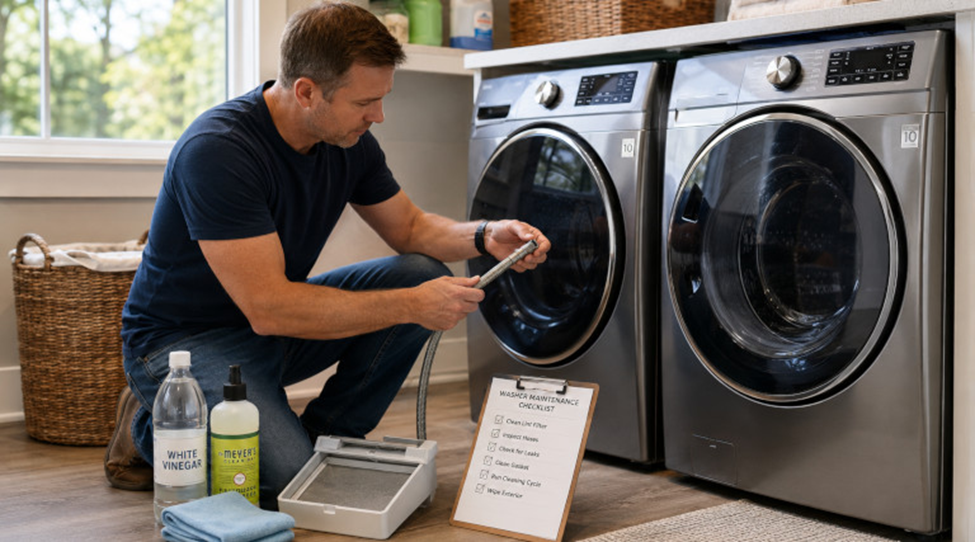
Alt text: Homeowner inspecting washing machine hoses in a clean, organized laundry room with front-load washer and dryer, demonstrating preventive laundry room maintenance in a Buford, Georgia home.
The laundry room rarely gets the attention it deserves.
Most homeowners focus on maintaining kitchens, bathrooms, and living spaces, while the laundry room quietly handles hundreds of loads of laundry every year. Unfortunately, that often means problems go unnoticed until they become expensive.
I learned this lesson firsthand when a washing machine supply hose failed behind my washer. The leak wasn’t dramatic at first. It was just a slow drip hidden from view. By the time I discovered it, water had seeped beneath the flooring and into the drywall. What could have been a simple hose replacement turned into a much larger repair project.
Since then, I’ve paid much closer attention to laundry room maintenance, and I’ve found that most costly problems start with small warning signs that homeowners overlook.
For Buford homeowners, regular maintenance is especially important. North Georgia’s humid climate, frequent appliance use, and mineral-rich water can all contribute to wear and tear over time.
The good news is that keeping your laundry room in top shape doesn’t require specialized skills or a major time commitment. A few simple habits can help extend appliance life, improve efficiency, and prevent unexpected repairs.
Key Takeaways
- Clean your washing machine drum monthly to reduce residue and odors.
- Inspect washing machine hoses every six months for signs of wear.
- Clean dryer vents annually to improve safety and performance.
- Maintain proper ventilation to control moisture and prevent mold growth.
- Organize the space so maintenance issues are easier to spot.
- Address small appliance problems before they become major repairs.
- Follow a simple maintenance schedule throughout the year.
Why Laundry Room Maintenance Matters
The laundry room is one of the few areas in a home that combines water, electricity, heat, humidity, and frequent appliance use.
When maintenance is neglected, several issues can develop:
- Water damage from leaking hoses or connections
- Mold and mildew growth caused by excess moisture
- Higher utility bills from inefficient appliances
- Premature appliance failure
- Fire hazards associated with lint buildup
One Buford homeowner I spoke with noticed that her dryer was taking nearly two cycles to dry a normal load. She assumed the appliance was getting old and considered replacing it. The actual problem was a heavily clogged vent line. After a professional vent cleaning, drying times returned to normal.
Situations like this are common. Many laundry room problems have simple solutions when caught early.
Washing Machine Maintenance Basics
Your washing machine is likely one of the most frequently used appliances in your home. Proper maintenance can improve performance and help prevent costly repairs.
Clean the Drum Monthly
Detergent residue, fabric softener, dirt, and minerals gradually accumulate inside the drum.
Over time, this buildup can create unpleasant odors and reduce the effectiveness of cleaning.
Run an empty hot-water cycle with two cups of white vinegar once a month. Follow with a second cycle using half a cup of baking soda.
For households that wash sports uniforms, pet bedding, or heavily soiled clothing, monthly cleaning becomes even more important.
Inspect Door Gaskets and Dispensers
Front-load washers are particularly vulnerable to mold and mildew buildup around the rubber door gasket. Gasket issues often leads to front-load washers leaking from the bottom.
Take a moment each week to wipe away moisture and inspect for residue.
The detergent drawer should also be removed and cleaned periodically to prevent buildup that can restrict water flow.
Check Inlet Screens and Filters
Many homeowners never realize that their washing machines contain inlet screens designed to catch sediment from the water supply.
Over time, mineral deposits can reduce water flow and affect wash performance.
If your machine includes a drain pump filter, clean it according to the manufacturer’s recommendations.
If reduced water flow, incomplete cycles, or filling issues continue after cleaning the screens, professional washer repair in Buford, GA may be necessary to diagnose underlying mechanical or water supply problems.
Inspect Hoses Every Six Months
Washing machine hoses are one of the most overlooked components in the laundry room.
Look for:
- Cracks
- Bulges
- Rust near fittings
- Loose connections
- Water stains behind the machine
Standard rubber hoses typically last about five years. Braided stainless-steel hoses often provide greater durability and leak protection.
A homeowner in Buford’s older neighborhoods recently discovered a bulging hose during a routine inspection. Replacing the hose costs less than dinner for two. Had it failed during a wash cycle, the repair costs could have been substantial.
If you notice drainage problems, persistent leaks, unusual noises, or performance issues that routine maintenance doesn’t resolve, it’s often best to have the appliance evaluated before the problem worsens. Homeowners seeking professional appliance repair services can consult local experts, such as Appliance EMT, to diagnose issues and help prevent further damage.
Make Sure the Washer Is Level
Excessive vibration during spin cycles can strain internal components and water connections.
If your washer walks across the floor or shakes excessively, check the leveling feet and adjust them as needed.
Leave the Door Open Between Loads
After completing laundry, leave the washer door slightly open.
This allows moisture to escape and helps prevent mold growth, especially during Georgia’s humid summer months.
Essential Dryer Maintenance Tips
While washing machines often receive most of the attention, dryers present their own maintenance challenges.
Clean the Lint Filter After Every Load
This simple task improves airflow, reduces drying times, and lowers energy consumption.
More importantly, it helps reduce fire risks associated with lint accumulation.
Clean Moisture Sensors
Many modern dryers rely on moisture sensors to determine when clothes are dry.
Fabric softener residue can coat these sensors and cause inaccurate readings.
Wipe them gently with rubbing alcohol every few months to maintain performance.
Deep-Clean the Dryer Vent Annually
The lint filter only captures a portion of the lint produced during drying cycles.
The remainder accumulates inside the vent system.
Warning signs of restricted airflow include:
- Longer drying times
- Excessive heat
- Increased humidity
- Burning odors
- Clothes remaining damp after a full cycle
Many homeowners are surprised by how much lint can collect inside a vent line after only a year or two.
Inspect the Exterior Vent Cap
Check the exterior vent periodically to ensure the flap opens and closes freely.
Remove leaves, pollen, nesting materials, and debris that may restrict airflow.
This is especially important during the spring pollen season in North Georgia.
Listen for Unusual Dryer Noises
Squealing, grinding, or thumping sounds often indicate worn rollers, bearings, or belts.
Addressing these issues early can prevent more extensive repairs later.
Alt text: Well-ventilated laundry room with washer and dryer, exhaust fan, and dehumidifier helping control humidity and prevent moisture buildup in a Buford, Georgia home.
Ventilation Matters More Than Most Homeowners Realize
Every laundry cycle introduces moisture into the home.
Without adequate ventilation, that moisture can contribute to:
- Mold growth
- Peeling paint
- Musty odors
- Poor indoor air quality
If your laundry room contains an exhaust fan, verify that it vents outdoors rather than into an attic or crawl space.
For interior laundry rooms, a small dehumidifier can be a worthwhile investment during humid summer months.
One homeowner near Lake Lanier noticed condensation forming on nearby walls during peak summer humidity. Adding a dehumidifier significantly reduced moisture levels and eliminated recurring mildew issues.
Protecting Floors and Walls
Laundry rooms are constantly exposed to moisture, vibration, cleaning products, and heavy foot traffic.
Choosing durable materials helps protect your investment.
Best Flooring Options
I generally recommend:
- Porcelain tile
- Ceramic tile
- Luxury vinyl plank (LVP)
These materials resist moisture and are easy to clean.
Protect Against Hidden Leaks
Consider installing a washing machine drain pan beneath the appliance.
A drain pan won’t prevent every leak, but it can help contain minor water issues before they damage the flooring.
Use Durable Paint Finishes
Semi-gloss and satin paints hold up better than flat finishes in moisture-prone environments.
They’re also easier to clean when dust and detergent residue accumulate.
Organization Makes Maintenance Easier
A clean, organized laundry room isn’t just visually appealing. It also makes problems easier to identify.
When floors are cluttered with baskets, cleaning supplies, and storage bins, small leaks can remain hidden for weeks.
Simple organizational upgrades include:
- Wall-mounted shelving
- Utility cabinets
- Pull-out hampers
- Storage baskets
- Bright LED lighting
I’ve noticed that homeowners who keep laundry rooms organized are often the first to spot developing issues before they become expensive repairs.
Laundry Room Challenges in Buford
Buford’s growth over the last two decades has created a diverse mix of older homes and new construction.
Older homes sometimes have aging plumbing connections, converted utility spaces, or outdated venting systems. Newer homes typically feature dedicated laundry rooms, but installation shortcuts occasionally appear in vent routing or drainage configurations.
The local climate also presents challenges.
Summer humidity levels can place additional strain on laundry rooms, especially those with limited airflow. Exterior vents often collect pollen and debris during spring, reducing efficiency if not inspected regularly.
Water quality can also contribute to mineral buildup inside washing machines and water supply components. Monthly cleaning cycles are particularly beneficial for homeowners dealing with hard-water deposits.
Homeowners who rely on private wells should pay particular attention to changes in water pressure, sediment levels, and water quality, as these issues can affect both appliance performance and longevity. Understanding common well system problems and knowing when to seek professional residential well pump service help can prevent unnecessary wear on washing machines and other water-dependent appliances.
Understanding these local factors helps homeowners make smarter maintenance decisions.
A Simple Laundry Room Maintenance Schedule
Monthly
- Clean the washing machine drum
- Wipe door gaskets and dispensers
- Inspect for visible leaks
- Check for unusual appliance noises
Every Six Months
- Inspect hoses and water connections
- Verify washer leveling
- Clean drain pump filters
- Check flooring around appliances
Annually
- Deep-clean the dryer vent
- Inspect the exterior vent cap
- Clean inlet screens
- Evaluate hose condition
- Inspect walls and flooring for hidden moisture damage
Frequently Asked Questions
How often should I clean my washing machine?
A full drum-cleaning cycle should be performed once a month. Wipe down the gasket and detergent dispenser weekly.
What are the signs my dryer vent needs cleaning?
Long drying times, excessive heat, burning odors, and increased humidity are common warning signs.
How long do washing machine hoses last?
Rubber hoses typically last about five years. Braided stainless-steel hoses often last longer and provide additional durability.
Should I use extra detergent for heavily soiled loads?
Usually not. Excess detergent often leaves residue behind. An extra rinse cycle is generally more effective.
When should I repair rather than replace a washer?
If repair costs are less than half the price of a replacement and the appliance is under ten years old, repair is often the better value.
Why Prevention Beats Repair
The laundry room may not be the most visible part of your home, but it plays a critical role in everyday life.
A little preventive maintenance goes a long way toward extending appliance life, improving efficiency, and preventing costly surprises. By cleaning appliances regularly, inspecting hoses and vents, maintaining proper ventilation, and staying organized, Buford homeowners can keep their laundry rooms running smoothly year after year.
In my experience, the most expensive laundry room repairs are often the ones that could have been prevented with a few minutes of routine maintenance. Treat this space with the same attention you give the rest of your home, and it will continue working reliably behind the scenes.